
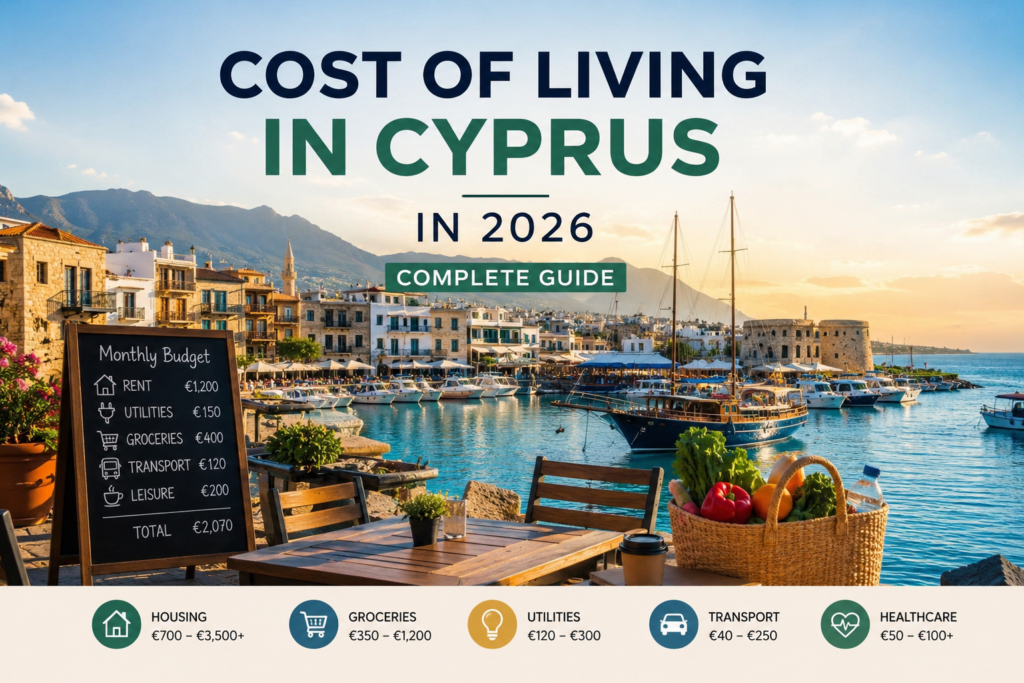
Cyprus continues to attract expatriates, retirees, remote workers, entrepreneurs and investors thanks to its Mediterranean lifestyle, excellent climate and relatively affordable living costs. If you’re planning a move, start with our Moving to Cyprus: Complete Guide for 2026.
While living expenses vary depending on your location and lifestyle, Cyprus generally offers a good balance between quality of life and affordability.
This guide explains the real cost of living in Cyprus in 2026, including housing, groceries, utilities, transportation, healthcare and education.
Is Cyprus Expensive?
Compared to countries such as the United Kingdom, Germany, France, the Netherlands and Scandinavia, Cyprus remains relatively affordable.
The biggest monthly expense is usually accommodation, while food, transport and healthcare are often cheaper than in many Northern European countries.
Your actual costs will depend on:
- City or region
- Property type
- Family size
- Lifestyle preferences
- Whether you rent or own property
Housing Costs in Cyprus
Housing is typically the largest monthly expense.
Not sure which city is right for you? Read our Best Places to Live in Cyprus guide comparing Limassol, Paphos, Larnaca and Nicosia.
Average Monthly Rent
One-Bedroom Apartment
- Nicosia: €700–€1,000
- Limassol: €1,200–€1,800
- Larnaca: €700–€1,100
- Paphos: €700–€1,200
Three-Bedroom Apartment
- Nicosia: €1,200–€1,800
- Limassol: €2,000–€3,500+
- Larnaca: €1,200–€1,800
- Paphos: €1,300–€2,000
Limassol remains the most expensive city due to strong demand from international companies, professionals and investors.
Utility Costs
Typical monthly utility expenses include:
- Electricity: €80–€250
- Water: €20–€50
- Internet: €30–€45
- Mobile phone: €15–€35
Electricity costs can increase significantly during summer because of air conditioning.
Grocery Costs
Cyprus offers a good selection of local and imported products.
Typical Prices
- Milk (1 litre): €1.50
- Bread: €1.50–€2.50
- Eggs (12): €3–€5
- Chicken breast (1kg): €8–€12
- Apples (1kg): €2–€3
- Tomatoes (1kg): €1.50–€3
- Bottled water (1.5L): €0.50–€1
A couple typically spends:
- €250–€400 per month on groceries
A family of four may spend:
- €400–€700 per month
Dining Out
Cyprus has a strong food culture and dining out is common.
Average Restaurant Prices
- Coffee: €3–€5
- Casual lunch: €10–€18
- Dinner for two: €40–€80
- Fine dining: €100+
Traditional taverns often provide excellent value for money.
Transportation Costs
Public Transport
- Single bus ticket: approximately €2
- Monthly bus pass: approximately €40
Fuel
Petrol and diesel prices fluctuate but generally range between:
- €1.30–€1.70 per litre
Car Ownership
Monthly costs may include:
- Fuel
- Insurance
- Maintenance
- Road tax
Many residents prefer owning a car due to the flexibility it provides.
Healthcare Costs
Cyprus offers both public and private healthcare.
We will cover the healthcare system in more detail in our upcoming Healthcare in Cyprus for Expats guide.
Public Healthcare (GESY)
Residents who qualify for the national healthcare system benefit from affordable medical services and prescriptions.
Private Healthcare
Private medical consultations typically cost:
- €50–€100 per visit
Private health insurance varies according to age and coverage.
Education Costs
Public Schools
Public education is generally free for eligible residents.
Private Schools
Annual tuition fees typically range from:
- €5,000–€15,000+
International schools can exceed this range depending on curriculum and facilities.
Families relocating to Cyprus should also read our Moving to Cyprus: Complete Guide for information on schools, healthcare and residency options.
Monthly Budget Examples
Single Person
| Expense | Monthly Cost |
|---|---|
| Rent | €800 |
| Utilities | €150 |
| Groceries | €300 |
| Transport | €150 |
| Leisure | €200 |
| Total | €1,600–€2,000 |
Couple
| Expense | Monthly Cost |
|---|---|
| Rent | €1,200 |
| Utilities | €200 |
| Groceries | €500 |
| Transport | €250 |
| Leisure | €300 |
| Total | €2,400–€3,000 |
Family of Four
| Expense | Monthly Cost |
|---|---|
| Housing | €1,800 |
| Utilities | €250 |
| Groceries | €1,000 |
| Transport | €350 |
| Education | Variable |
| Total | €3,500–€5,000+ |
Which City Offers the Best Value?
Paphos
Best for:
- Retirees
- Families
- Lifestyle-focused buyers
Advantages:
- Lower property prices
- Relaxed atmosphere
- Strong expatriate community
Larnaca
Best for:
- First-time buyers
- Remote workers
- Families
Advantages:
- Good balance of affordability and convenience
- International airport
- Growing property market
Nicosia
Best for:
- Professionals
- Students
- Business owners
Advantages:
- Economic centre of Cyprus
- Strong job market
- Lower housing costs than Limassol
Limassol
Best for:
- Investors
- Entrepreneurs
- International executives
Advantages:
- Largest international business community
- Luxury developments
- Vibrant lifestyle
Choosing the right city is one of the most important decisions when relocating. Our Best Places to Live in Cyprus guide provides a detailed comparison of each region.
Frequently Asked Questions
A single person typically needs between €1,600 and €2,000 per month, while a couple often requires €2,400 to €3,000 depending on location and lifestyle.
In many categories, including housing, dining and healthcare, Cyprus can be more affordable than the UK.
Limassol is generally the most expensive city in Cyprus due to strong international demand.
Many retirees choose Cyprus because of its climate, healthcare options and relatively moderate living costs.
Many retirees, investors and families choose Cyprus because of its climate, healthcare options and relatively moderate living costs. Those considering long-term relocation should also explore Cyprus Permanent Residency Explained and Investment in Cyprus: Complete Guide.