
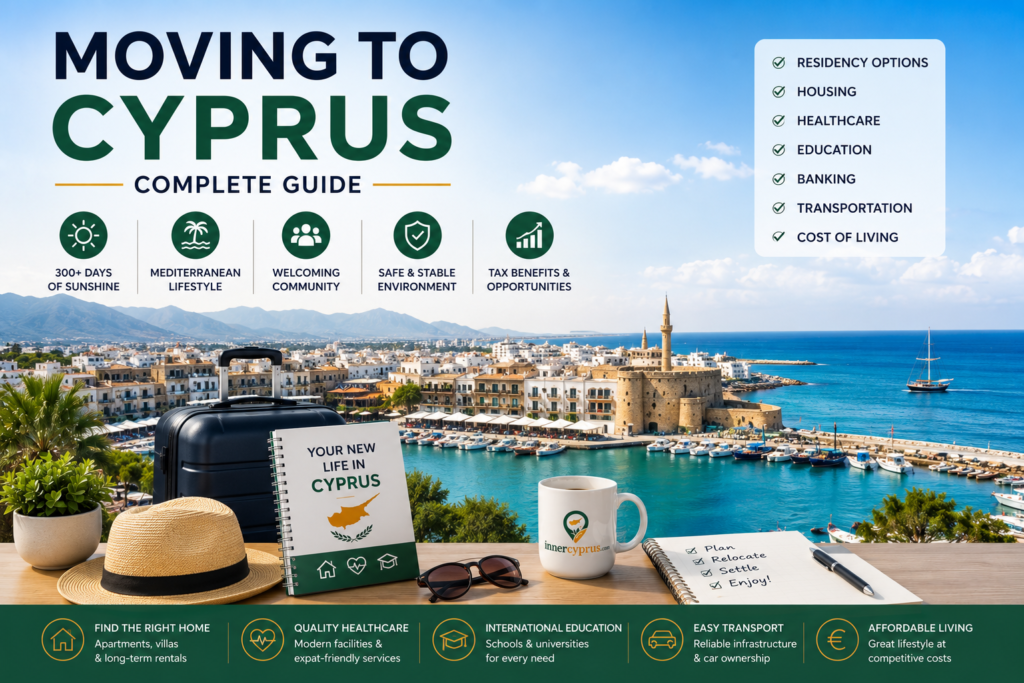
Cyprus continues to attract families, retirees, entrepreneurs, remote workers and investors from around the world. With its Mediterranean climate, high quality of life, attractive tax environment and welcoming international community, the island has become one of Europe’s most popular relocation destinations.
If you are planning to move to Cyprus in 2026, this guide covers everything you need to know, including residency options, housing, healthcare, education, banking, transportation and the overall cost of living. For a detailed breakdown of monthly expenses, see our Cost of Living in Cyprus in 2026 guide.
Why Move to Cyprus?
Cyprus offers a unique combination of lifestyle, safety and opportunity.
Some of the main reasons people relocate to Cyprus include:
- More than 300 days of sunshine per year
- Mediterranean lifestyle and beaches
- English widely spoken
- European Union member state
- Attractive tax framework
- Growing business ecosystem
- High-quality healthcare
- International schools
- Safe environment for families
Whether you are seeking a better lifestyle, planning your retirement, or exploring investment opportunities, Cyprus offers a balanced and attractive environment.
Best Places to Live in Cyprus
Not sure which city is right for you? Read our complete Best Places to Live in Cyprus guide comparing Limassol, Paphos, Larnaca and Nicosia.
Limassol
Limassol is Cyprus’s business and financial hub. It attracts international professionals, entrepreneurs and investors.
Pros:
- International community
- Luxury developments
- Excellent restaurants and nightlife
- Strong property market
Best for:
- Business owners
- Investors
- High-income professionals
Paphos
Paphos is particularly popular among retirees and families seeking a relaxed lifestyle.
Pros:
- Lower property prices
- Beautiful coastline
- Strong expatriate community
- Relaxed pace of life
Best for:
- Retirees
- Families
- Remote workers
Nicosia
The capital city offers year-round activity and professional opportunities.
Pros:
- Government services
- Business opportunities
- Universities
- Urban lifestyle
Best for:
- Professionals
- Students
- Entrepreneurs
Larnaca
Larnaca provides a balance between affordability and convenience.
Pros:
- International airport
- Growing property market
- Lower living costs
Best for:
- Families
- First-time buyers
- Digital nomads
Residency Options in Cyprus
Your residency pathway depends on your nationality and personal circumstances.
EU Citizens
Citizens of European Union countries can live and work in Cyprus with relatively straightforward registration procedures.
Non-EU Citizens
Non-EU nationals have several possible pathways:
- Employment permits
- Digital nomad visas
- Company formation
- Permanent Residency by Investment
- Family reunification
Professional advice is recommended to determine the most suitable option.
Cyprus Permanent Residency
Permanent Residency remains one of the most attractive options for individuals planning a long-term move. Learn more in our Cyprus Permanent Residency Explained guide.
Benefits may include:
- Permanent right of residence
- Access to Cyprus lifestyle and services
- Potential pathway for family relocation
- Long-term security
Requirements may change, so applicants should always verify current regulations before proceeding.
Cost of Living in Cyprus
We cover housing, groceries, utilities and transportation in detail in our Cost of Living in Cyprus guide.
Housing
Average monthly rents:
- One-bedroom apartment: €700–€1,300
- Family apartment: €1,200–€2,500+
Limassol generally has the highest rental prices.
Utilities
Monthly utilities typically range between:
- €120–€250
Depending on property size and air-conditioning usage.
Groceries
A couple can generally expect monthly grocery expenses between:
- €350–€700
Transportation
Fuel prices and vehicle ownership costs remain competitive compared with many Western European countries.
Healthcare in Cyprus
Cyprus offers both public and private healthcare options.
The national healthcare system, known as GESY, has significantly improved access to medical services.
Advantages include:
- Modern facilities
- English-speaking doctors
- Affordable healthcare
- Private insurance options
Many expatriates choose a combination of public and private healthcare coverage.
Education and International Schools
Families relocating to Cyprus benefit from a wide range of educational options.
Popular international schools are available in:
- Limassol
- Nicosia
- Larnaca
- Paphos
Many schools follow:
- British curriculum
- International Baccalaureate (IB)
- American curriculum
English-language education is widely available.
Banking and Finances
Opening a Cyprus bank account generally requires:
- Passport
- Proof of address
- Residency documentation
- Source of funds information
Many international residents also use digital banking solutions alongside local banks.
Working and Doing Business in Cyprus
Cyprus continues to attract entrepreneurs due to:
If you are considering launching a company, read our Starting a Business in Cyprus: Step-by-Step Guide.
- Competitive corporate tax rates
- Strategic location
- Access to European markets
- Skilled workforce
Popular sectors include:
- Technology
- Financial services
- Real estate
- Tourism
- Professional services
Property Investment in Cyprus
Property remains one of the most popular reasons people move to Cyprus.
Investors should also read our Investment in Cyprus: Complete Guide for 2026.
Popular investment locations include:
- Limassol
- Paphos
- Larnaca
- Nicosia
Investors should consider:
- Rental demand
- Capital appreciation
- Legal due diligence
- Long-term objectives
Working with trusted local professionals is essential before purchasing property.
Everyday Life in Cyprus
Many new residents quickly adapt to life on the island.
Common advantages include:
- Outdoor lifestyle
- Family-oriented culture
- Excellent weather
- Friendly local communities
- International environment
Life generally moves at a slower pace compared to many major European cities.
Challenges of Moving to Cyprus
Like any relocation, there are challenges to consider.
These may include:
- Bureaucratic processes
- Summer temperatures
- Housing availability in some areas
- Adapting to a new culture
Proper planning can significantly reduce these challenges.
Final Thoughts
Moving to Cyprus offers an opportunity to enjoy a Mediterranean lifestyle while benefiting from European stability, international connectivity and growing business opportunities.
Whether your goal is relocation, permanent residency, property investment or business expansion, careful planning and local guidance can help ensure a successful transition.
At Inner Cyprus, we help individuals, families and investors navigate every stage of their Cyprus journey.
Frequently Asked Questions
Yes. Cyprus offers a high quality of life, a warm climate, safety and access to European services.
The amount depends on your lifestyle, family size and location. Housing is typically the largest expense.
Yes. Foreign nationals can purchase property in Cyprus, subject to applicable regulations.
Cyprus offers both public and private healthcare options, with many English-speaking medical professionals.
Limassol, Paphos, Larnaca and Nicosia all attract expatriates for different reasons.